 R. Paul Falk examines the requirements of the burnt offering and reveals an amazing correlation with the offering of the first fruits and what seems to be a mysterious statement made by Yeshua after the resurrection.
R. Paul Falk examines the requirements of the burnt offering and reveals an amazing correlation with the offering of the first fruits and what seems to be a mysterious statement made by Yeshua after the resurrection.
 Patrick Shannon studies the materials that were commanded for the building of the tabernacle, examining their various sources and unique characteristics and what they each symbolically represent according to the Scriptures. He concludes on how these representations reflect us as the temple in which the Holy Spirit dwells today.
You can click here to view the slides presented and follow along.
 R. Paul Falk continues the series on the Sabbath with the Torah portion, Terumah, about being called to build a house (tabernacle) for the Eternal One. He highlights big differences between keeping the Shabbat in our dwellings compared to the commands regarding His house, almost all of which come down to the heart behind certain works on Shabbat.
 Rick Ortiz shares an outline of the Torah portion, Mishpatim, and focuses on the release of the Hebrew servant after seven years. Upon receiving his freedom, he has the option of making his servitude permanent, due to his love for his master, which is signified by the piercing of his ear at the doorpost of the master’s house.
In this Torah portion and message, R. Paul Falk continues the Shabbat series with some very clarifying insights about the enemy’s primary goal which is to enslave us, and how YHVH rescues us, bringing us out of bondage to give us freedom and rest. He also warns about how we sometimes misinterpret isolated scriptures and formulate false doctrines that we impose on others.
 Rick Ortiz outlines the Torah portion, Va-Era, and focuses in on the various aspects of a name, and in particular, the name of the Eternal that was given to Moses and the people of Israel. He also highlights what it means to have the name “put on us” and the significance that carries for us today.
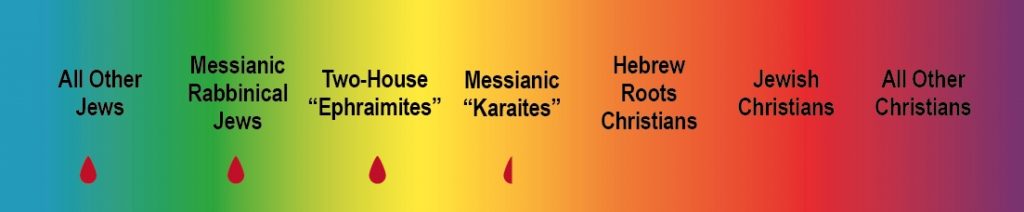
 Patrick Shannon launches from Jacob’s blessing of Ephraim and Manasseh into the will of Yah for all of creation which culminates in the mission of Yeshua which is handed down to us. As one of many congregations in the modern Messianic movement, Patrick identifies a spectrum of different doctrinal groups and answers the question, “What Tribe Are We?”
You can also click here for the slideshow to follow along.
 R. Paul Falk continues the Run the Race series based on Hebrews 12:1 showing how God changes each of us through the example in the Torah portion of Jacob dividing his house into two before meeting Esau, and how he uses the long-term effects of Jacob’s dislocated hip for a bigger plan.
 Rick Ortiz shares an outline of the Torah portion Mi-Ketz and highlights several important lessons that can be gleaned from the story of Joseph rising to power in Egypt and dealing with his brothers who came to him to buy food during the famine.
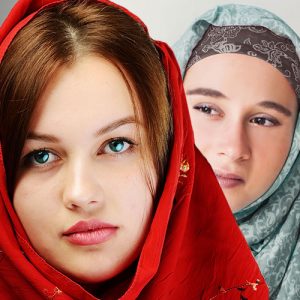 In the story of Jacob’s wives and children, Patrick Shannon makes some observations about differences in personalities between Rachel and Leah. Jacob loved Rachel more and she was apparently more beautiful, but the Eternal blessed Leah with more than half of Jacob’s children.